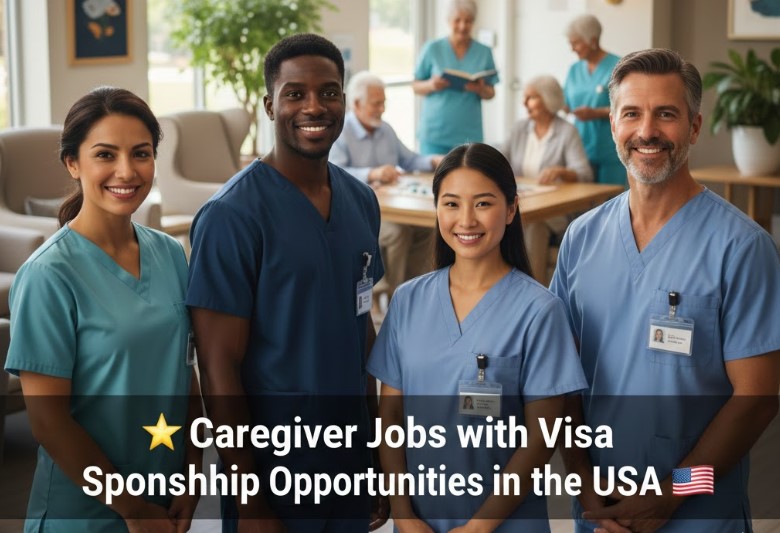
Securing Caregiver Jobs with Visa Sponsorship Opportunities in the USA is a multi-step journey, but the rewards; a stable, respected career, competitive wages, and the potential for permanent residency, are well worth the effort.
The US government and private sector alike recognize the immense value foreign workers bring to this critical field, leading many employers, from large healthcare systems to specialized home-care agencies, to commit to the costly and complex visa sponsorship process.
This commitment transforms a dream into a tangible plan, moving from aspiration to active application. Understanding the specific visa categories, the qualifications employers seek, and the application process will significantly boost your chances of achieving this life-changing career move.
The United States healthcare and home-care sector is experiencing a profound and sustained shortage of compassionate professionals, creating a significant demand that opens exciting pathways for international talent.
If you have been searching for Caregiver Jobs with Visa Sponsorship Opportunities in the USA, you’ve landed in the right place.
This article is your comprehensive guide to navigating the complexities and seizing the rewards of a fulfilling caregiving career in America.
The reality is that the need for skilled and dedicated caregivers; individuals who provide essential non-medical and personal support to the elderly, the disabled, and those with chronic illnesses, is surging, making Caregiver Jobs with Visa Sponsorship Opportunities in the USA one of the most viable avenues for immigration today.
The Unwavering Demand: Why Caregiver Jobs with Visa Sponsorship are Growing
The surging requirement for skilled hands and compassionate hearts in the American healthcare and home-care landscape is not a temporary trend but a fundamental demographic and socio-economic reality.
This intense, persistent shortage is the engine creating more Caregiver Jobs with Visa Sponsorship Opportunities in the USA. The following factors explain the critical nature of this demand.
The Exponential Growth of the Aging Population
The single most powerful driver for the need for Caregiver Jobs with Visa Sponsorship Opportunities in the USA is the massive demographic shift known as the “Silver Tsunami.” The Baby Boomer generation (those born between 1946 and 1964) is transitioning into their later years, creating the largest cohort of older adults in U.S. history.
As people live longer due to advancements in medical care, the duration and complexity of long-term care needs increase significantly.
This growth rate has far outpaced the natural rate of entry into the domestic caregiving workforce, leaving a colossal staffing gap that can only be reliably filled through international recruitment strategies that include visa sponsorship.
High Turnover and Retention Crisis in Domestic Workforce
Even before the surge in demand, the U.S. caregiving industry was plagued by a high turnover rate, often exceeding 50% annually in some sectors.
This crisis stems from several factors inherent to the job, including emotionally demanding work, significant physical labor, and, critically, traditionally low wages and limited benefits compared to other entry-level jobs. This constant exodus means that facilities and agencies are in a perpetual state of recruitment.
For an employer, sponsoring a foreign caregiver through the EB-3 immigrant visa process represents an investment in stability, as sponsored workers often show lower turnover rates due to the multi-year commitment required by the visa process, thereby making Caregiver Jobs with Visa Sponsorship Opportunities in the USA an attractive strategy for employers seeking long-term retention.
The Preference for “Aging in Place”
A strong and nearly universal cultural preference among older Americans is the desire to “age in place”; that is, to remain in their own homes or communities rather than moving to institutional settings like nursing homes.
This preference has dramatically shifted the demand from large, centralized care facilities to distributed, in-home care models, primarily staffed by Home Health Aides (HHAs) and Personal Care Workers (PCWs).
This move to in-home care multiplies the number of required positions and creates a localized demand in virtually every city and town across the country, making the search for qualified, reliable staff offering Caregiver Jobs with Visa Sponsorship Opportunities in the USA a national priority for home-care agencies.
The Undervaluation and Stigma of the Profession
Despite the essential, life-sustaining nature of caregiving, the profession has often been culturally and economically undervalued within the domestic labor market.
While efforts are underway to increase compensation, historical perception and pay scales have discouraged many younger American workers from entering or remaining in the field. This persistent domestic labor shortfall is precisely what opens the door for international talent.
Employers who offer Caregiver Jobs with Visa Sponsorship Opportunities in the USA are, in effect, recognizing the vital nature of the role and are willing to bear the substantial legal and administrative costs of sponsorship as a way to secure dedicated, professional workers who view caregiving as a high-value, career-defining opportunity.
Expansion of Chronic Illnesses and Complex Needs
Modern medicine allows people to live longer with chronic conditions such as diabetes, Alzheimer’s disease, heart failure, and complex disabilities.
Caregivers today are increasingly required to assist with tasks that border on medical support, such as medication management, monitoring vital signs, and assisting with specialized equipment. This increased complexity demands a higher level of training, reliability, and emotional maturity.
The resulting need for workers who are fully committed to the profession, which is often characteristic of international applicants seeking a permanent career in the U.S., further motivates employers to invest in the security and stability provided by offering Caregiver Jobs with Visa Sponsorship Opportunities in the USA.
Caregiver Jobs with Visa Sponsorship Opportunities in the USA
The wide array of caregiving roles available in the U.S. means there are several distinct avenues to pursue Caregiver Jobs with Visa Sponsorship Opportunities in the USA.
While the core mission remains providing compassionate support, the settings, required certifications, and duties vary, influencing which employers are most likely to sponsor an EB-3 Green Card. Below are some different roles where visa sponsorship is a possibility, along with their general salary ranges.
1. Certified Nursing Assistant (CNA)
Average Salary Range: $35,000 to $45,000+ per year
Certified Nursing Assistants (CNAs) represent one of the most common and robust categories for Caregiver Jobs with Visa Sponsorship Opportunities in the USA, particularly within institutional settings. CNAs perform essential, hands-on, basic nursing care under the supervision of a Registered Nurse (RN) or Licensed Practical Nurse (LPN).
Their duties include assisting patients with Activities of Daily Living (ADLs) such as bathing, dressing, and feeding, monitoring vital signs, recording patient health information, and helping with mobility and transfers.
Because CNAs are required staff in every skilled nursing facility (SNF), rehabilitation center, and hospital, the chronic nationwide shortage in these high-volume facilities drives their willingness to invest in the multi-year EB-3 sponsorship process to secure reliable, long-term staff.
Having an international CNA certification or being willing to undergo the state-specific certification process upon arrival is a vital prerequisite for this path.
2. Home Health Aide (HHA)
Average Salary Range: $32,000 to $40,000+ per year
The Home Health Aide (HHA) role is central to the “aging-in-place” trend and offers ample Caregiver Jobs with Visa Sponsorship Opportunities in the USA through large home-care franchises.
HHAs provide in-home care to clients who are elderly, ill, or disabled, assisting with personal care (hygiene, grooming) and performing light housekeeping, meal preparation, medication reminders, and running errands. Unlike CNAs who work in facilities, HHAs travel to client homes, requiring excellent communication and time management skills.
Many home-care agencies that secure contracts with government programs for long-term care are facing severe staffing shortages in remote or less-populated areas, making them strong candidates for filing EB-3 “Unskilled Worker” petitions to fill these essential roles.
3. Personal Care Assistant (PCA) / Personal Care Aide (PCA)
Average Salary Range: $30,000 to $38,000+ per year
Often overlapping significantly with the HHA role, the Personal Care Assistant (PCA) primarily focuses on non-medical support and companionship, although the exact duties vary by state and employer. PCAs offer assistance with daily tasks, mobility, and companionship to foster independence and emotional well-being for their clients.
The PCA role typically falls under the EB-3 “Unskilled Worker” category and requires less formal medical training than a CNA, often requiring just a high school diploma and verifiable experience.
Because the demand for non-medical, long-term care companionship is surging, many large, national agencies focused on providing senior services are actively pursuing visa sponsorship for PCA candidates to meet their escalating staffing needs.
4. Live-in Caregiver
Average Salary Range: $38,000 to $55,000+ per year
Live-in Caregiver positions involve living in the client’s home to provide round-the-clock support, though labor laws mandate scheduled time off and rest periods. This role provides an intensely personalized form of care, covering all aspects of daily living, including household management, transportation, and complex scheduling.
While the high salary range often reflects the inclusion of rent and food cost savings, the role is highly demanding and requires significant cultural adaptability.
Because of the necessity for a continuous, dedicated presence, some wealthy families or specialized placement agencies that work for these clients may pursue the EB-3 “Unskilled Worker” visa to secure a caregiver who is committed to a multi-year term.
5. Facility Aide / Patient Transporter
Average Salary Range: $30,000 to $37,000+ per year
Facility Aides or Patient Transporters primarily work within large hospitals, long-term care centers, or rehabilitation facilities. While they often assist in basic patient care, their main duty is the safe and timely movement of patients between units for tests, procedures, or admissions/discharges.
This role, while not directly providing complex personal care, is essential to the function of medical facilities and is often staffed by individuals with caregiver-level skills.
Since hospital systems manage massive workforces and require constant staffing for support roles, these positions can sometimes be bundled into immigration-sponsoring initiatives under the EB-3 umbrella, though the sponsorship volume is generally lower than for core CNA positions.
6. Dementia/Alzheimer’s Care Specialist (Caregiver)
Average Salary Range: $36,000 to $44,000+ per year
A Dementia/Alzheimer’s Care Specialist is a caregiver who has received specialized training in supporting clients with cognitive impairment. The role requires a high degree of patience, specialized communication techniques, and the ability to manage behavioral challenges associated with memory loss.
Due to the increasing prevalence of Alzheimer’s and related dementias, many assisted living communities and specialty home health groups are actively seeking candidates with this expertise.
The specialized nature of the care, which requires commitment and specific skill sets, makes candidates for these roles highly attractive to employers willing to offer EB-3 visa sponsorship to stabilize their expert care teams.
7. Hospice Aide (HHA/CNA)
Average Salary Range: $38,000 to $48,000+ per year
Hospice Aides provide compassionate, non-medical care to patients nearing the end of life, either in a dedicated hospice facility or in the patient’s home.
The focus of the role is on comfort, dignity, and emotional support, alongside routine personal care tasks. This work is intensely personal and requires a unique blend of technical skill and emotional resilience.
Due to the sensitive nature and specialized training required, hospice organizations often seek dependable, career-focused staff and may utilize the EB-3 visa process to ensure continuous, high-quality care, especially as the demand for palliative services continues to expand across the U.S.
8. Direct Support Professional (DSP)
Average Salary Range: $31,000 to $39,000+ per year
Direct Support Professionals (DSPs) work primarily with individuals who have intellectual or developmental disabilities. The goal is to help these individuals live as independently as possible in group homes or in their own residences.
Duties focus on teaching life skills (budgeting, cooking, community navigation), vocational support, and personal care. The high demand for DSPs in community-based residential facilities is driven by mandated staffing ratios and government programs designed to integrate individuals with disabilities into the community.
Many non-profit and private organizations operating these group homes are experienced in using EB-3 sponsorship to secure dedicated staff for their essential, long-term programs.
9. Mental Health Aide / Residential Counselor
Average Salary Range: $35,000 to $45,000+ per year
Working within residential treatment facilities, halfway houses, or community mental health centers, Mental Health Aides provide direct supervision, emotional support, and assistance with daily routines for individuals struggling with mental illness or substance abuse.
While a separate category from elder care, these roles fall squarely within the broader definition of direct patient care and social assistance services.
The constant need for round-the-clock staffing in these residential settings often makes these employers turn to visa sponsorship to fill demanding shifts, making this a niche area for qualified applicants seeking Caregiver Jobs with Visa Sponsorship Opportunities in the USA.
10. Rehabilitation Aide
Average Salary Range: $34,000 to $42,000+ per year
Rehabilitation Aides work in physical therapy (PT) or occupational therapy (OT) clinics and rehabilitation hospitals. They assist the licensed therapists by preparing treatment areas, moving equipment, cleaning, and sometimes helping patients with exercises under direct supervision.
Their role is critical in ensuring the efficient flow of patient care in busy therapy departments. Though they do not provide primary personal care, their function is a vital, direct patient support role within the healthcare continuum.
Given the growth of post-acute rehabilitation needs for the aging population, the high volume of work in these facilities often necessitates the hiring of sponsored support staff through the EB-3 process.
11. Certified Medication Aide (CMA)
Average Salary Range: $37,000 to $47,000+ per year
A Certified Medication Aide (CMA), also sometimes called a Medication Technician, is a Certified Nursing Assistant who has undergone additional specialized training to safely administer certain medications to patients, often in long-term care or assisted living facilities, under the supervision of a licensed nurse.
The ability to administer medications is a critical skill set that significantly increases the value of a caregiver in a facility setting.
Because they perform a higher-level task than a standard CNA or HHA, CMAs are often compensated better, and the heightened level of responsibility makes employers even more motivated to retain these skilled staff members via the long-term stability offered by Caregiver Jobs with Visa Sponsorship Opportunities in the USA through the EB-3 visa.
The Application Process: Your Step-by-Step Guide
The path to securing Caregiver Jobs with Visa Sponsorship Opportunities in the USA through the EB-3 visa is highly structured and primarily driven by the sponsoring employer.
It is a long-term process that requires patience, precision, and coordination between the foreign worker (you), the U.S. employer, and the immigration authorities (Department of Labor and USCIS).
Step 1: Secure the Job Offer and Prove Qualifications
The journey for Caregiver Jobs with Visa Sponsorship Opportunities in the USA begins when you receive a formal, full-time, permanent job offer from a U.S. employer. This is the cornerstone of the entire employment-based visa application.
Your responsibility here is to meticulously present your credentials, such as your experience letters, diplomas, and any CNA or HHA certifications, to prove you meet the minimum, legitimate requirements for the offered caregiver position.
The job offer is vital because the employer must demonstrate that they intend to hire you for a specific, ongoing role that pays at least the prevailing wage. The employer will assess your qualifications against the job’s requirements, and this verification is critical, as any discrepancy can lead to denial later in the process.
Step 2: The Employer Files for Prevailing Wage Determination (PWD)
Before the employer can formally test the U.S. labor market, they must first determine the accurate wage for the offered position. The employer, or their attorney, submits a request to the Department of Labor (DOL) for a Prevailing Wage Determination (PWD), which establishes the minimum wage the employer is legally obligated to pay the sponsored foreign worker.
This step is essential to ensure that employing the foreign caregiver will not “adversely affect the wages and working conditions” of similarly employed U.S. workers in the geographical area.
This determination, based on the job duties and minimum requirements, must be completed and approved before the employer can proceed with the labor certification, and it is entirely the employer’s responsibility.
Step 3: The Employer Files for PERM Labor Certification (ETA Form 9089)
The PERM (Program Electronic Review Management) labor certification is the most crucial, costly, and time-consuming stage of the application for Caregiver Jobs with Visa Sponsorship Opportunities in the USA.
The employer must undertake a rigorous, DOL-regulated recruitment campaign to prove that there are no qualified, willing, and available U.S. workers for the caregiver position. This typically involves placing job advertisements in various media, including the State Workforce Agency and sometimes a newspaper.
After the recruitment period ends and the employer reviews applications and concludes that no qualified U.S. worker was found, they file the ETA Form 9089 with the DOL. The approval of this certification officially clears the labor market hurdle and validates the need for the foreign caregiver.
Step 4: The Employer Files the Immigrant Petition (Form I-140)
Once the DOL grants the PERM Labor Certification, the employer moves to the second major stage by filing Form I-140, Immigrant Petition for Alien Worker, with U.S. Citizenship and Immigration Services (USCIS).
This petition is filed on your behalf and serves to confirm two primary points: first, that the job offer is valid and that you, the beneficiary, meet the required qualifications as stipulated in the certified PERM application; and second, that the sponsoring employer has the financial ability to pay the prevailing wage offered.
Upon acceptance of the I-140, a Priority Date is established, which is usually the date the PERM application was initially filed. This date determines your place in the line for an available visa number.
Step 5: Wait for Visa Availability (The Visa Bulletin)
Because of annual limits imposed by Congress on the number of immigrant visas granted, especially in the EB-3 “Other Workers” category often used for caregiver roles, applicants from certain high-demand countries may face significant wait times.
You must wait until your priority date becomes “current,” as announced monthly in the U.S. Department of State’s Visa Bulletin. Once your priority date is current for your country of chargeability and visa category, you can proceed to the final step of the Green Card process.
This waiting period can sometimes be the longest part of the journey for those seeking Caregiver Jobs with Visa Sponsorship Opportunities in the USA, especially if they come from countries with high backlogs.
Step 6: Final Visa Processing: Adjustment of Status or Consular Processing
The final step is the formal application for the Green Card itself, which takes one of two forms based on your location:
- Adjustment of Status (AOS): If you are already physically present in the United States in a lawful non-immigrant status (e.g., on a student or temporary work visa), you will file Form I-485, Application to Register Permanent Residence or Adjust Status, with USCIS.
- Consular Processing (CP): If you are residing outside of the United States, your case file will be sent from USCIS to the National Visa Center (NVC), and subsequently to the U.S. Embassy or Consulate in your home country. You will complete your final paperwork (DS-260, Immigrant Visa Application) and attend an immigrant visa interview.
Step 7: Receive Your Green Card and Begin Employment
Whether through Adjustment of Status or Consular Processing, the successful completion of the final interview and background checks marks the end of the long process. Once approved, you officially become a Lawful Permanent Resident (LPR) of the United States.
Your Green Card will be mailed to your U.S. address shortly after your approval or entry. You are then free to begin the Caregiver Job with Visa Sponsorship Opportunity in the USA that your employer sponsored you for, starting your new career and life in America.
A Career of Purpose Beyond the Visa
Choosing a caregiving career in the U.S. is about far more than just immigration. It is a decision to embrace a deeply meaningful profession in a country that desperately needs your skills and compassion.
The day-to-day work is challenging, but the human connections you forge are priceless. As a sponsored caregiver, you will become an essential part of an individual’s life, helping them maintain their dignity, health, and independence.
This profound sense of purpose, coupled with the economic stability and cultural experience of life in America, makes Caregiver Jobs with Visa Sponsorship Opportunities in the USA one of the most rewarding career pathways available to international workers.
Your journey requires patience, meticulous documentation, and an unwavering focus on legitimate opportunities. By preparing your qualifications, understanding the EB-3 process, and partnering with a trustworthy employer, you are well on your way to securing a fulfilling caregiving role and establishing a permanent home in the United States.